| This site was founded by the late John Skakel. Contact us HERE
Cemeteries Office Staff have asked that users NOT contact them with questions directly.
Historical Bits and Pieces Useful bits
of Useless or Forgotten historical information
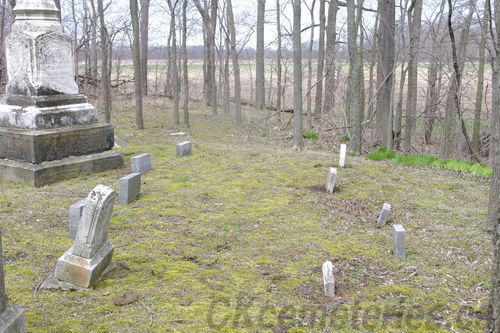
Photo of Williams Cemetery Showing beautiful
example of an old time plot with head and foot stones. |
Introduction
In future you will find a few examples of general information that we have learned about old time cemetery plots and bits and pieces of cemetery information. Please remember that this is like the coffee shop where you sit down and slip your shoes off, grab a coffee and a doughnut and have a chat. We will do our best to keep everything as factual as we know it to be here. But if you should find a mistake or have suggestions for further entries or even things you think we should delete please let us know.
How Graves were marked
Head Stones, Foot Stones, Corner markers etc. What were they and how were they used?
Today we often see examples of some of the old time plot markers. Particularly visible are the huge old obelisk markers that tower into the sky marking the graves of the loved ones of a family. Often times, in fact, more than one generation. It is very common to find a head stone or two plus a corner stone. Now and then you find an individual foot stone. BUT, it is very, very seldom that we find one in tact to look the way that they would have looked. We of course need to remember that not all had all types of stones. And many have been removed to allow the process of mowing the grass to become easier.
One of the very "Pretty" plots that we have found is in the photo above. Note the huge old stone giving the main source of information on the burials there. Then, down below and in front of it note the 4 matching head stones. They are flat "slate gray" stones very low to the ground. The purpose of these is to show who has been placed in that particular plot in the ground. You can tell from the huge stone that Catherine was interred here for example. On most of these huge old stones, you can tell the birth date, and very likely even the full name and, of course, date of death. Then, the gray slate head stones will tell you exactly where she is in the plot. This tells the family where she is and just as important tells the grave digger where she is.
But, which side of the head stone is she on? That is the function of the foot stone. Using the foot stone for reference, you then know the exact position of the casket under ground.
Add to that four corner stones and you have what would be a complete set of stones for the plot. The corner stones of course mark the borders of the plot itself.
As mentioned it is VERY unusual to see these today. Indeed seeing one like the photo above is quite unusual, but to see corner stones as well is just about impossible. Just because too many stones have been removed to allow for easier mowing of grass and plot upkeep.
Bits and Pieces
Tiny bits of information we have managed to find along the way.
1. Stand in front of the red brick building and walk across the bridge. Turn left and look at the trees along the bank of the creek. We have been told that there were huge vines of Poison Ivy and other similar "creatures" growing up into the trees there. Apparently those are saw marks of saws used to cut those vines off. You can see remainders of some of them if you look into the trees above.
2. In fall of 2010, we repaired the large stone crypt of the Payne family in Ward A. Next to the road that runs nearest to Indian Creek and parallel to it. When the crypt was taken apart a gun shell dating to approximately 1940 was found in there. Does this mean it was repaired around 1940 and the top was taken off then? We have no idea. We often find glass buried in the ground on top of memorial stones. We do not know if this is on purpose or just junk accumulated over the years. We have found evidence of folks burying broken glass because there was a belief that it would help the deceased to find his/her way to Heaven.
|